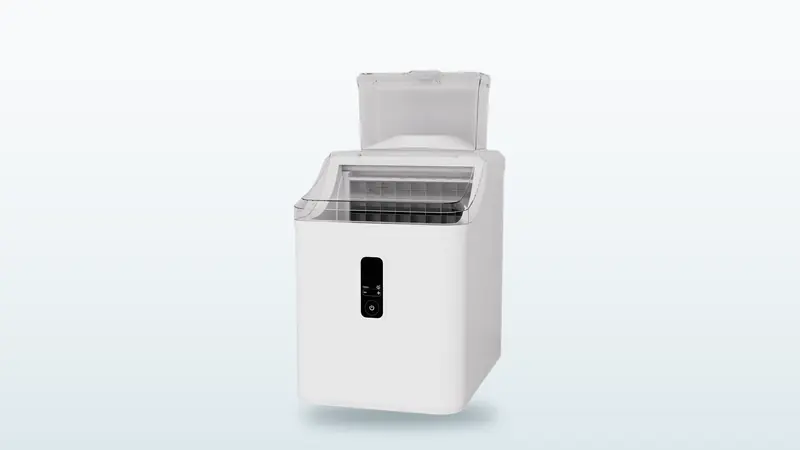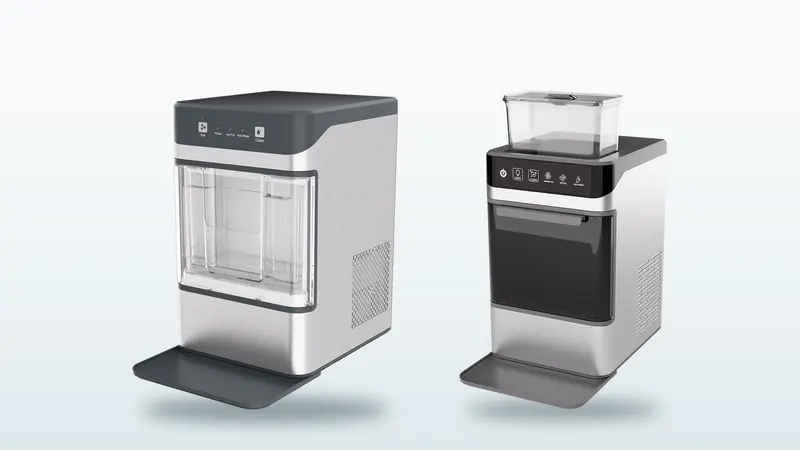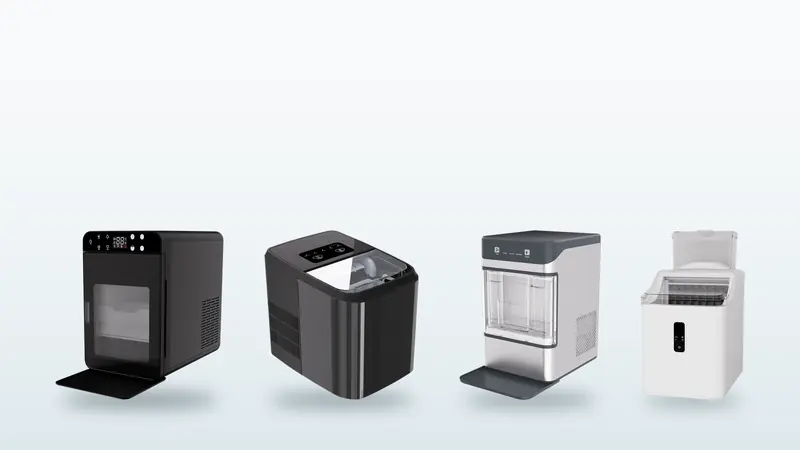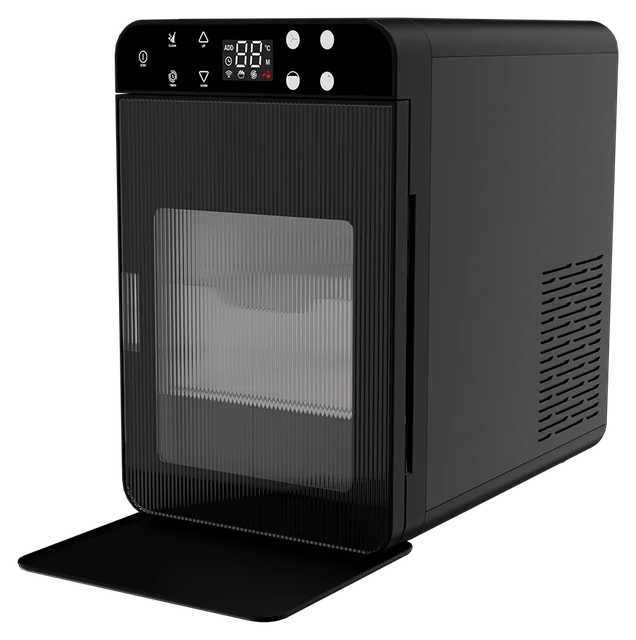
Why does ice melt in a countertop ice maker? What's normal, how to store it
The basket in most countertop ice makers is insulated, not frozen, so ice slowly melts and is made again. Here is when that is normal, and how to store ice safely at home or in a shop.
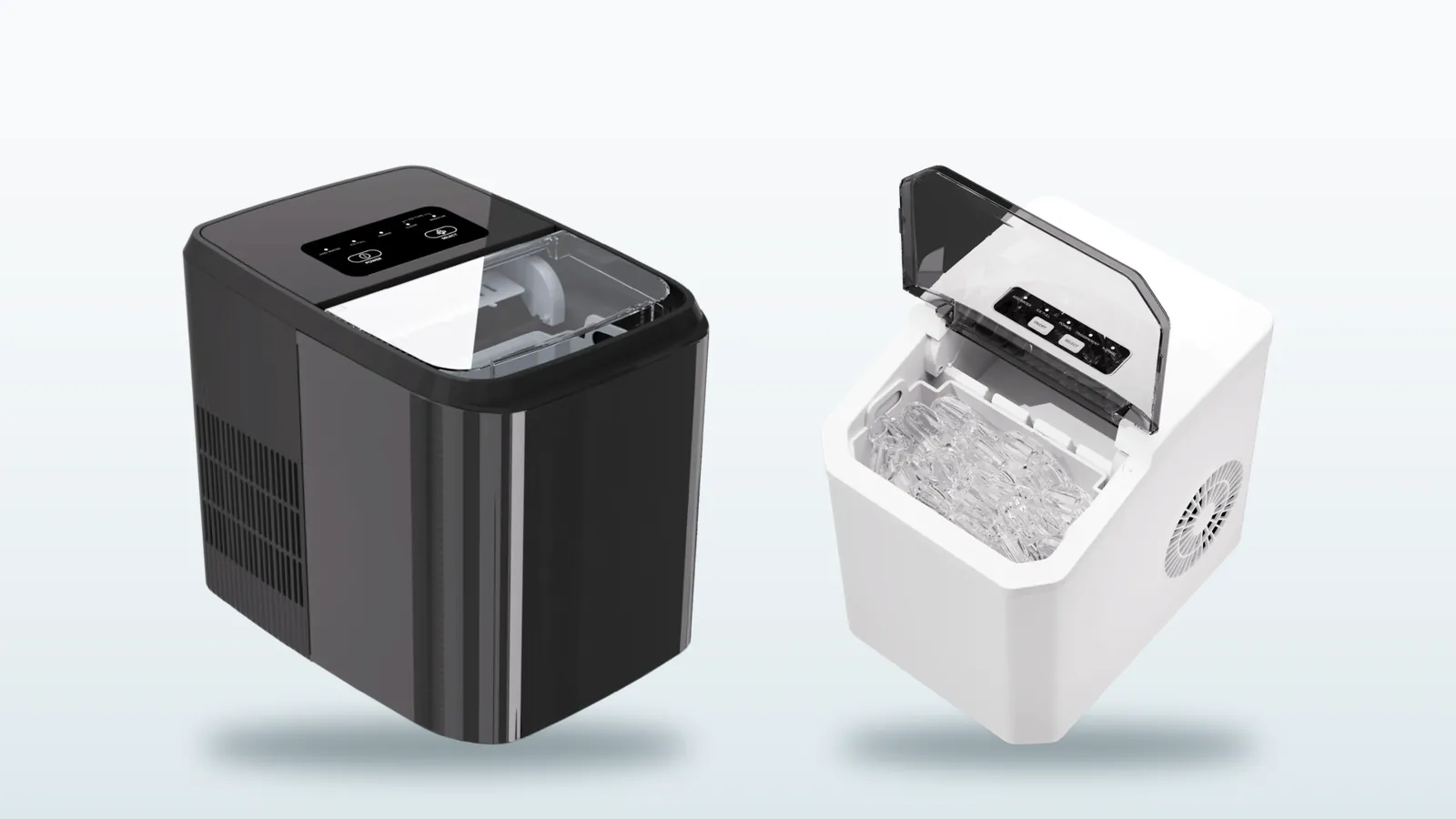
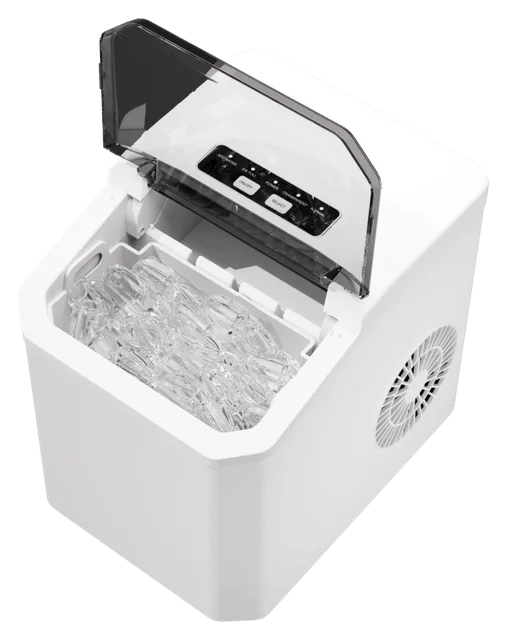
You open the lid of a countertop ice maker in the morning and find a basket of wet, half-melted ice, or a few pieces fused together. It looks like a fault, but it is how most of these machines are meant to work. Here is why ice melts in a countertop ice maker, when it is normal, and how to store ice so it stays dry, clean and ready to serve.
Why does ice melt in a countertop ice maker?
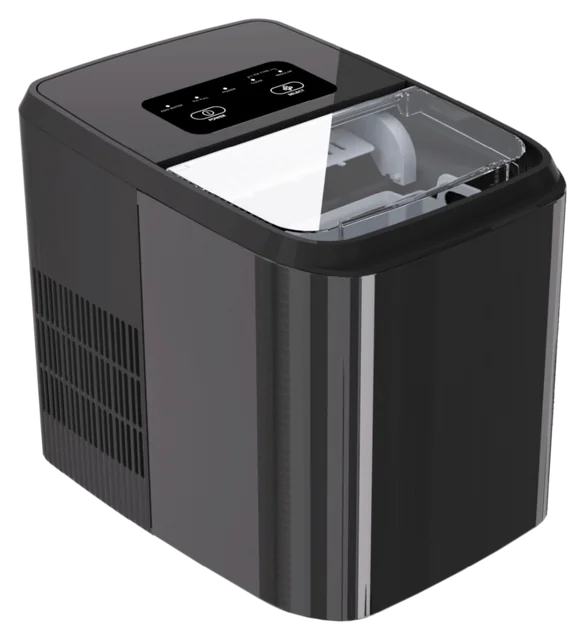
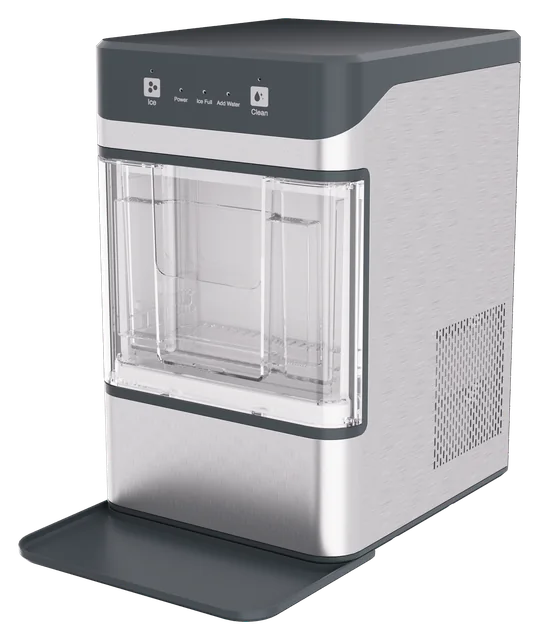
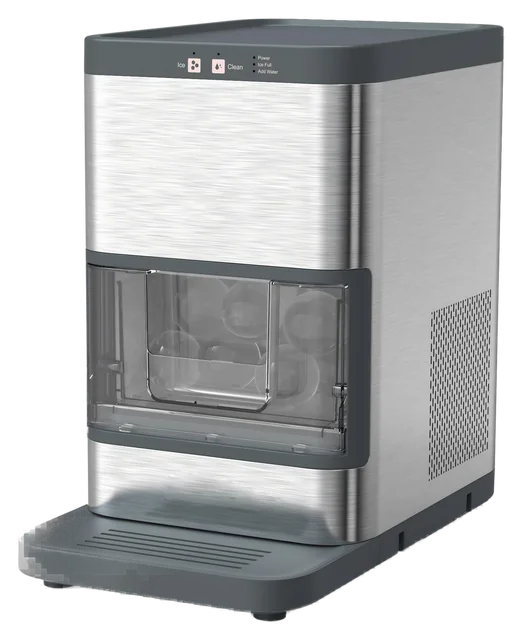
A countertop ice maker has a small freezing system that chills the part where ice forms: the prongs of a bullet machine, the plate of a cube machine or the cylinder of a nugget machine. The basket under it is not part of that system. Manufacturers say so plainly. NewAir writes that the storage bin in most countertop models is not a freezer, Sharper Image's user guide says the unit "is NOT a freezer", and Whynter's IMC-491DC manual puts it this way: "The ice basket does not keep the ice cubes frozen."
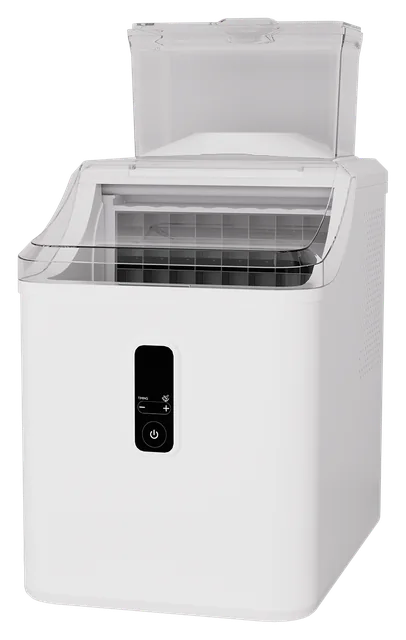
So the ice sits in an insulated box at room temperature and slowly melts. That water is not wasted. In most designs it drips back into the reservoir and is frozen again. Whynter's manual describes exactly that, and our own bullet ice makers work the same way: the pusher sweeps fresh ice into the basket and the melt water is reused. Our Support page sums it up: the basket is insulated, not frozen.
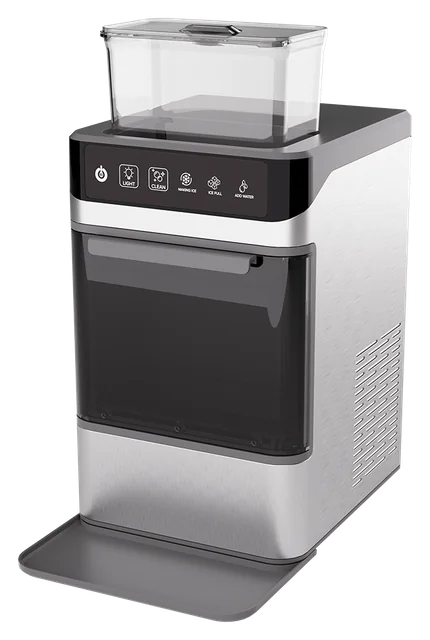
The type of ice matters too. Hollow bullet ice and small nugget pieces have a lot of surface for their weight, so they melt faster than a dense cube, a point Tasting Table also makes. That is one reason a basket of bullet ice looks wetter after a few hours than you might expect.
When melting is normal, and when it is not
Normal:
- Ice left overnight is wet, smaller, or partly melted.
- Some pieces stick together. Sharper Image warns that ice left in the device will melt and then be frozen again, which is how clumps form.
- The machine starts again after a while to top up the basket.
Worth a look:
- The machine is in a warm spot. Heat from an oven, a sunny window or a crowded counter speeds melting. Whynter gives 65–77°F (about 18–25°C) as the room temperature for best performance.
- The vents are blocked. GE's Opal manual asks for at least 3 inches of space at the back and sides; Sharper Image asks for 6 inches on the top, back and sides. Follow the figure in your own manual.
- The machine runs but the basket never fills. That is a different problem; see our step-by-step check in Countertop ice maker not making ice?
How to store ice from a countertop ice maker
Think of the basket as a short-term holding area, not storage. Use the ice within a few hours, or move it to a freezer.
- Take out what you will not use soon. Sharper Image, NewAir and our Support page all say the same: move ice to a freezer (or a cooler for a party) if you want to keep it.
- Freeze it in a clean, closed bag or container, so it does not pick up freezer smells and is easy to break apart.
- Use a clean scoop, not your hands.
- Keep the water fresh. Whynter tells owners to change the reservoir water every 24 hours and to drain it when the machine is not in use. Use clean drinking water only; never add juice, milk or other drinks.
- Clean on a schedule. GE recommends sanitizing its Opal once a week. Our guide on how to clean and descale a countertop ice maker covers how.
For cafés, bubble tea shops and bars
In a shop, ice is food. The US FDA Food Code 2022, which many state and local health departments base their rules on, says ice used as food must be made from drinking water, and that ice used to chill the outside of cans, bottles or equipment may not then be served.
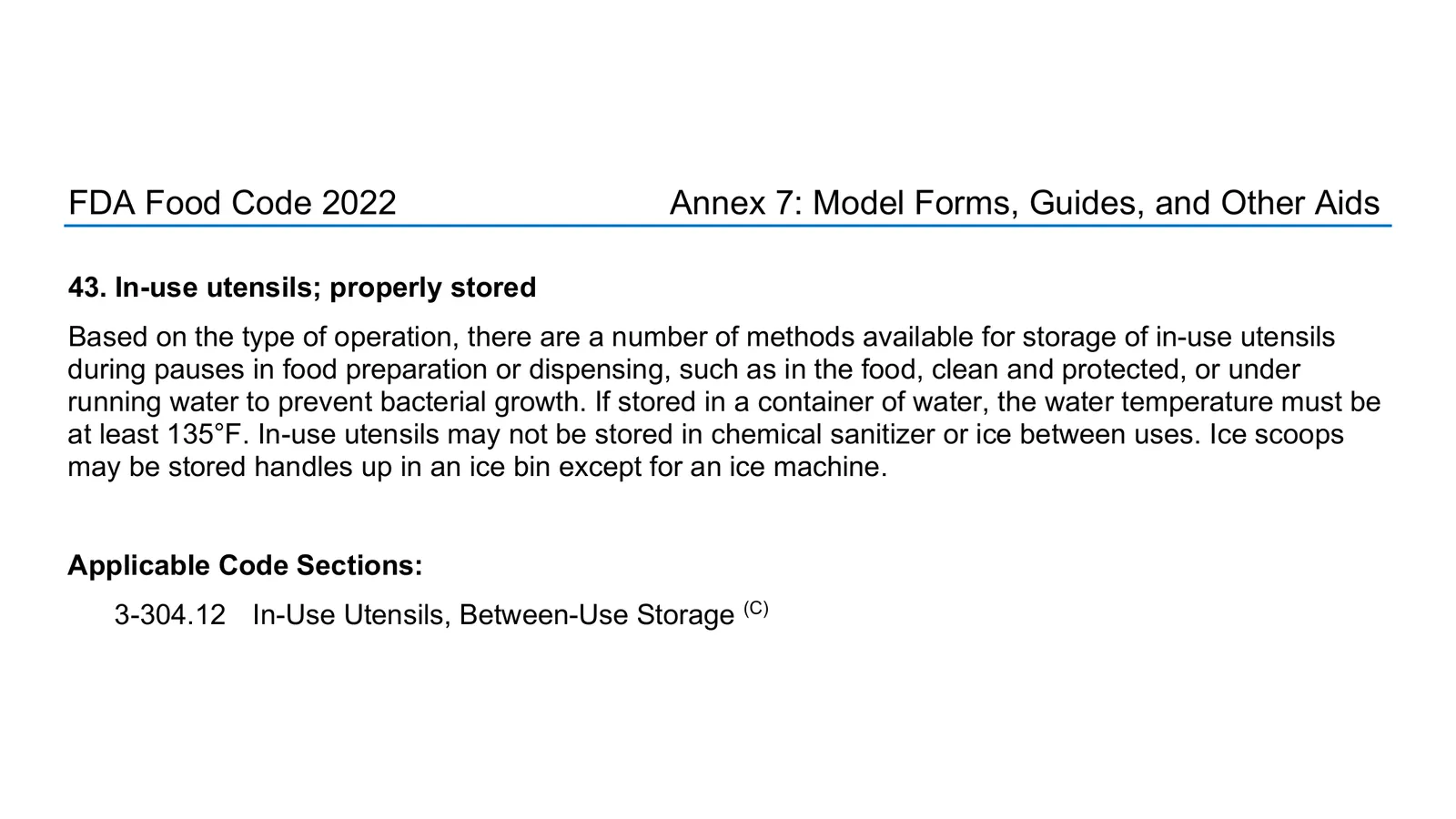
It also covers the scoop. Between uses, scoops should sit in a clean, protected place. The Code's inspection guide adds that scoops may be stored handles up in an ice bin, but not in an ice machine.
In practice, keep the scoop in a clean holder next to the machine, empty the basket into an insulated bin or freezer before a rush if you need a buffer, and check your local health department's rules, since they decide what applies to you.
If you are choosing a machine for steady service, compare daily output with how much ice you really use. A high-output model such as the YH515 bullet ice maker (15 kg / 24 h on its product page) refills the basket faster, but no countertop basket replaces a freezer for keeping ice for later.