Countertop ice maker not making ice? What to check, in order
Before you call for service, work through these checks in order: power, the two warning lights, heat, stuck ice and scale. If all of them pass, it's a job for a technician.
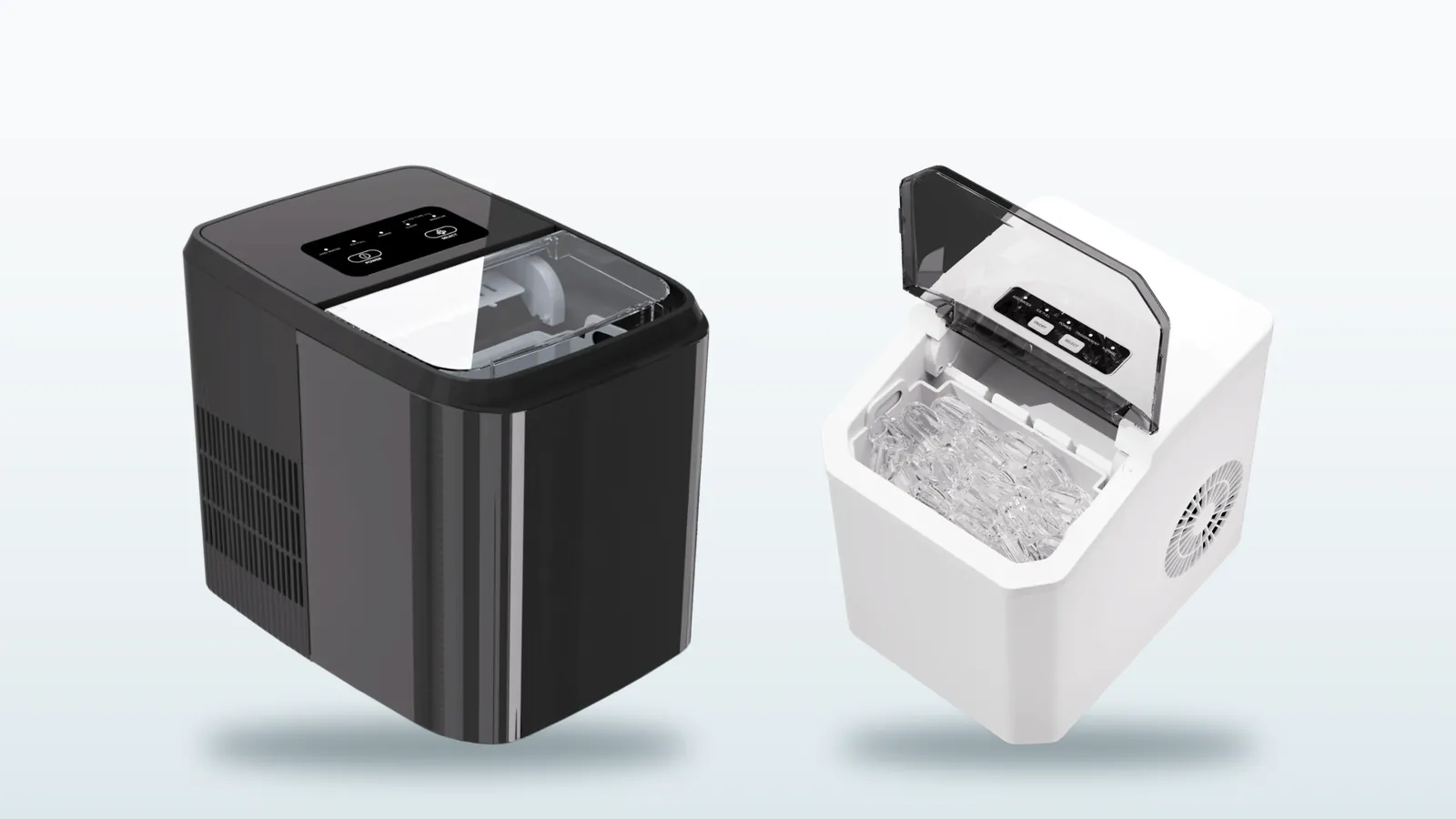
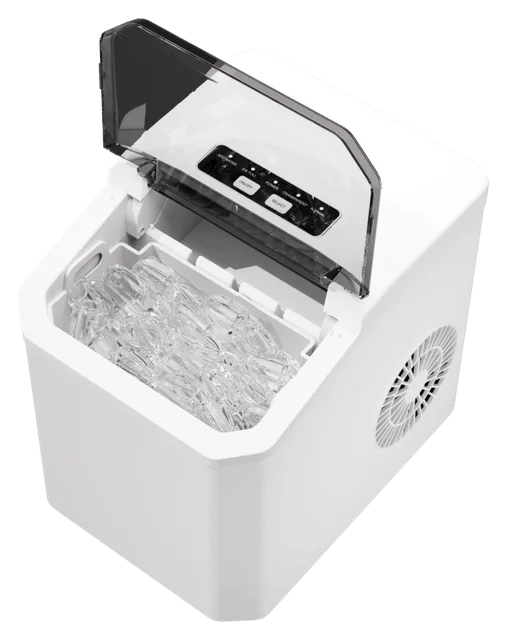
When a countertop ice maker is not making ice, the fix is often simple. In the troubleshooting tables of the manuals we read for this guide, most causes are things you can fix yourself: adding water, emptying the basket, cooling the room, clearing stuck ice. Start there and leave the service call for last.
Ice maker not making ice? First find where the cycle stops
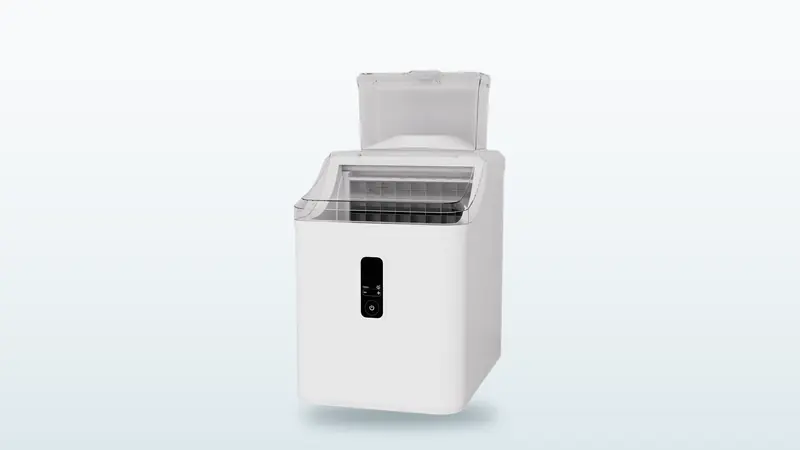
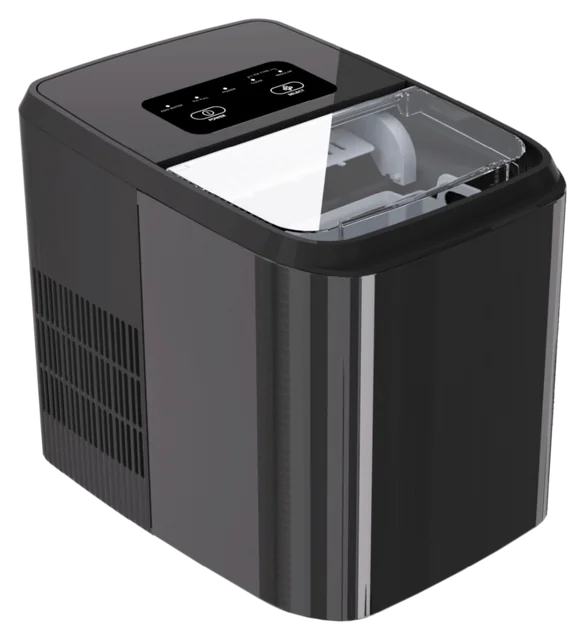
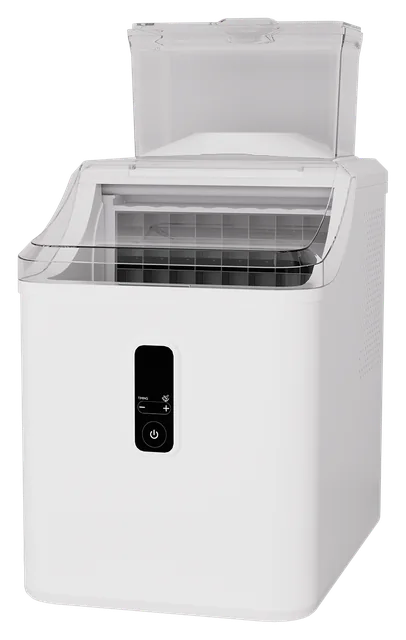
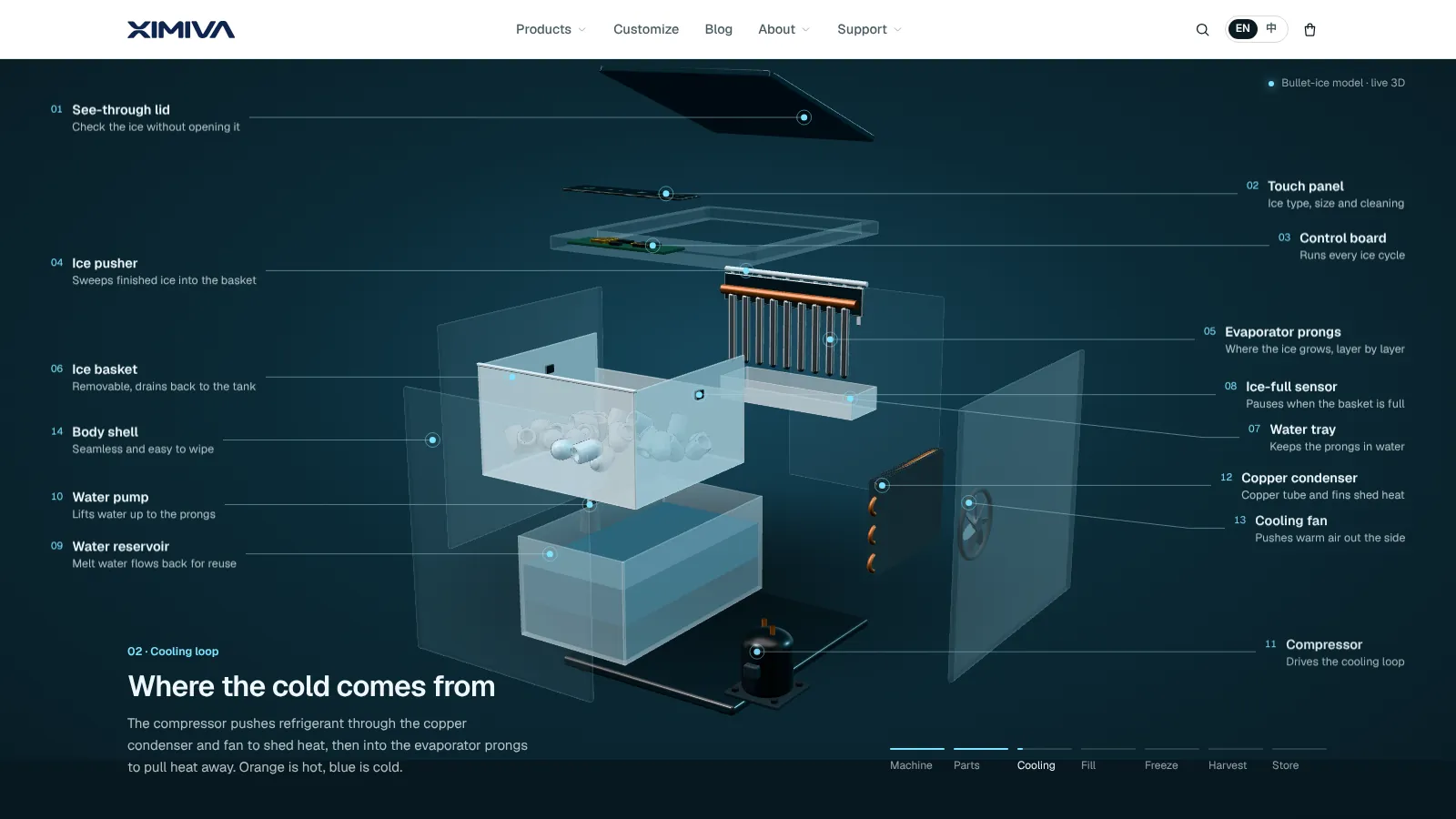
On countertop bullet ice makers you can follow the cycle through the lid window: a pump fills a tray, chilled metal prongs dip in and grow ice, then they warm, the tray tips back and a pusher sweeps the ice into the basket, until a sensor finds it full. Our Technology page shows it in 3D. Watch where it stalls, with the lid closed: opening it lets warm air in.
- No lights, no sound: start at step 1.
- The Add Water or Ice Full light is on: step 2.
- Water in the tray, but no ice on the prongs: step 3.
- Ice forms but won't drop, or comes out stuck together: step 4.
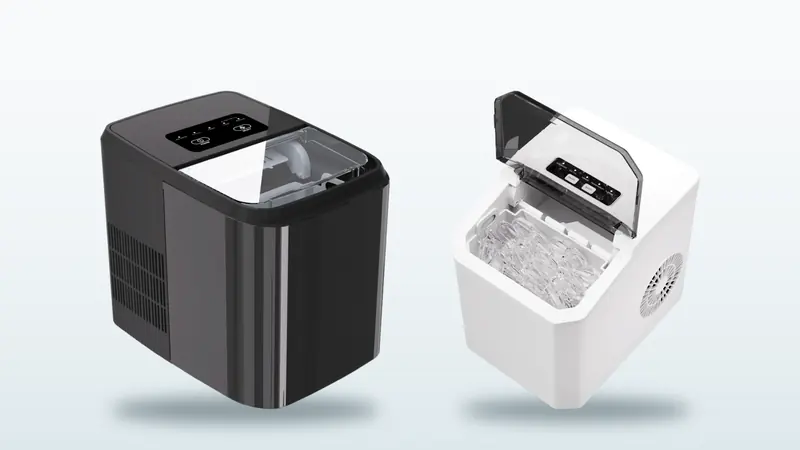
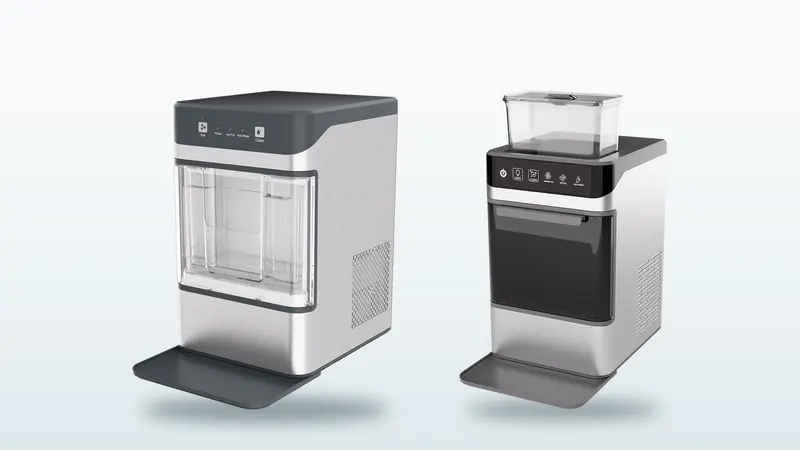
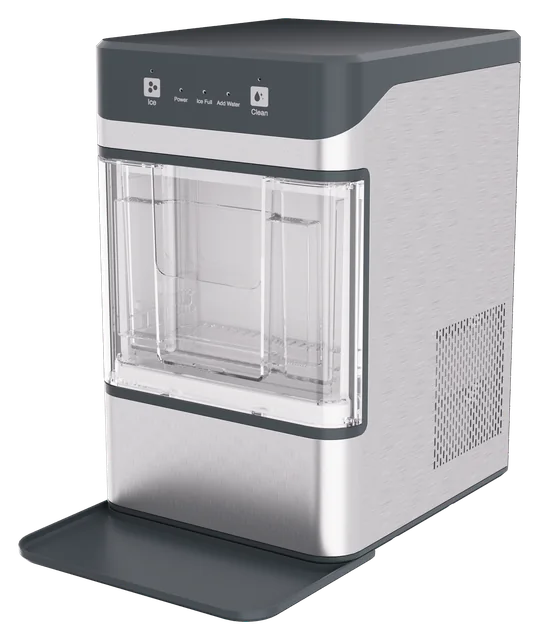
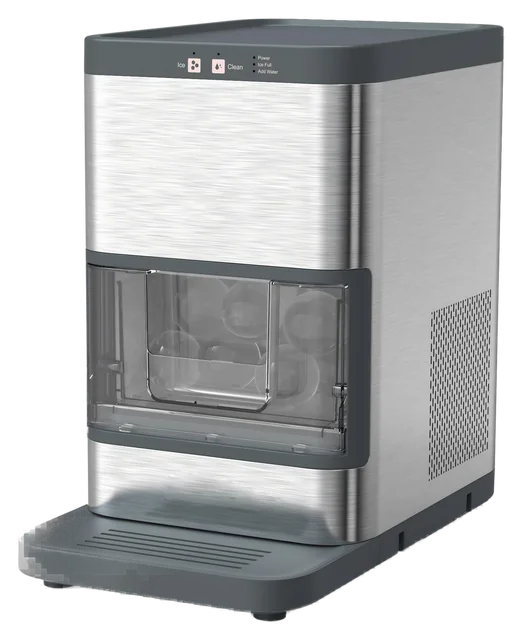
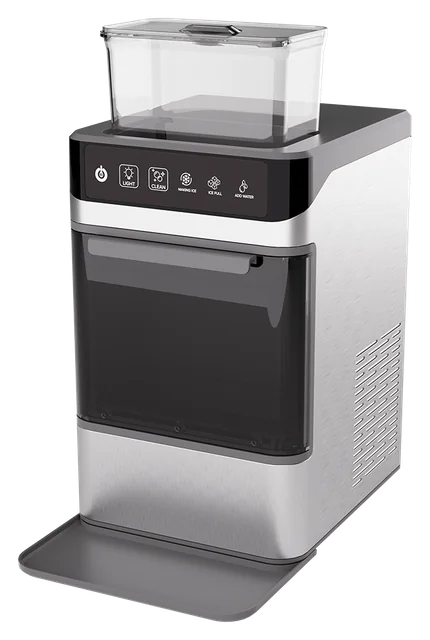
Nugget and cube machines work differently, but the same order applies.
1. Power, and a little patience
If nothing lights up, plug straight into a wall socket you know works. GE strongly advises against extension cords for its Opal ice maker.
After delivery or a move, let it stand upright before switching on so the compressor oil can settle. How long varies: one hour for one NewAir nugget model, 24 hours for another NewAir model and for Whynter. One brought in from the winter cold needs a few hours to warm up first.
Then give it time: our factory spec sheets put first ice at 6 to 14 minutes for nugget, bullet and cube models, and the first few batches are usually small.
2. Read the two warning lights
Add Water. Switch off, fill with drinking water to the line (not above MAX), check the drain plug is in and switch on again, as NewAir's manuals say. Still on with a full tank? The water itself may be the issue: Whynter warns its sensor may not detect purified, filtered, reverse-osmosis or distilled water.
Ice Full. Take some ice out; ours then carry on, while some machines need the power button pressed again. Light on, basket half empty? NewAir lists ice jamming the pusher: clear it and restart. If it still won't start, the sensor may have failed, a job for customer service. Keep it out of direct sun, too: NewAir's manuals say strong light can keep their infrared sensor from noticing a full basket.
3. Heat: the room, the water and the vents
An ice maker moves heat out of the water and into the room, so a hot room means less ice, or none. For "ice making cycle is normal but there is no ice", NewAir's first suspect is a warm room or warm water.
- Room: 10–32 °C (50–90 °F) on our spec sheets, 50–90 °F in Whynter's manual and 55–90 °F in GE's; Whynter warns that production may drop outside its range. Garage or patio? Check the temperature there.
- Water: fill with cold drinking water. NewAir gives 7–32 °C for one model.
- Air: leave 10–15 cm (4–6 in) free at the sides and back, depending on the manual. Keep it away from ovens, stoves and direct sun, and don't run it inside a cabinet.
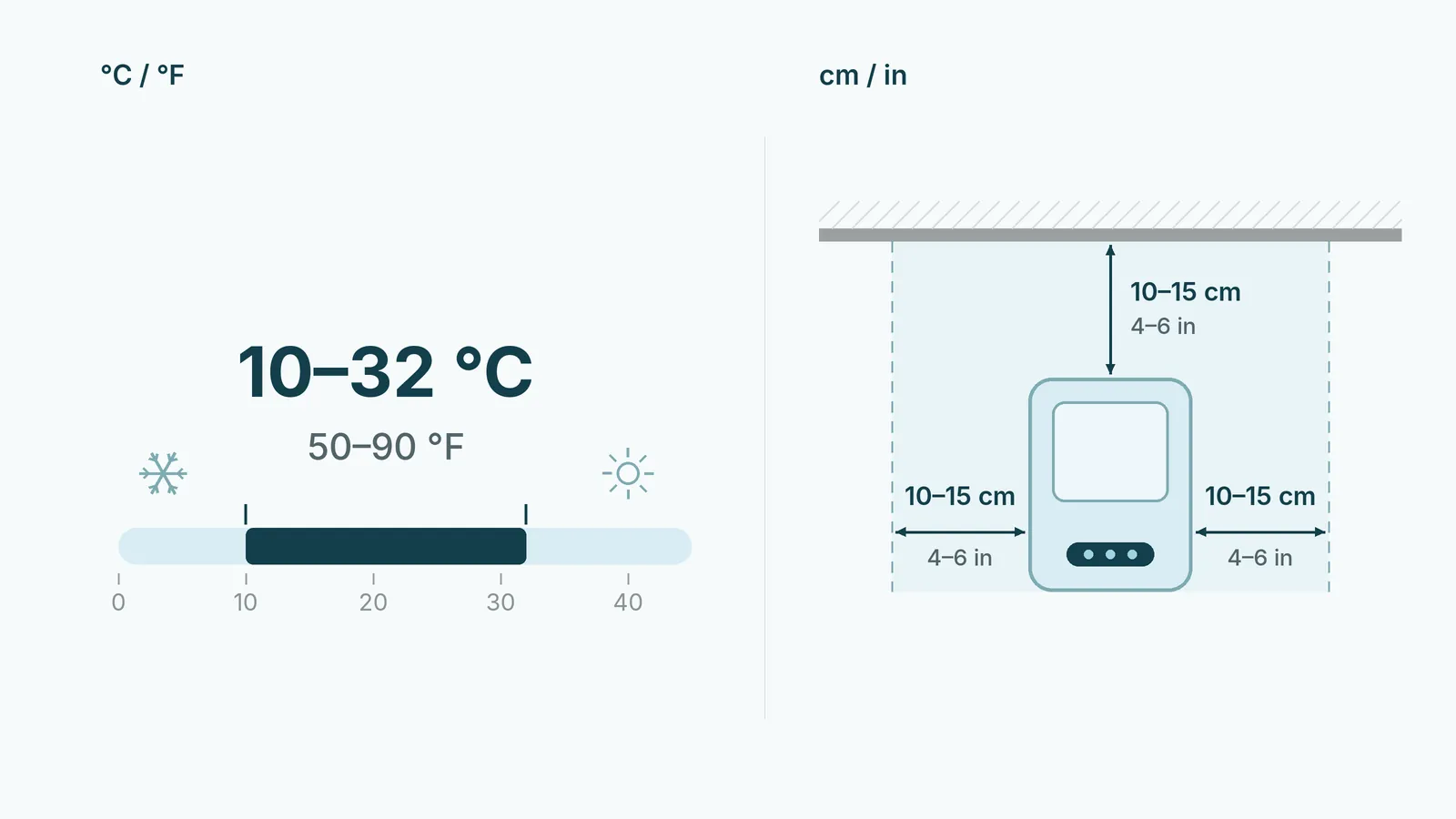
Heat also explains a basket that never fills: the basket is insulated, not refrigerated, so in a warm room more ice melts back into the reservoir. Whynter adds blocked airflow and a dirty condenser. Keep spare ice in the freezer.
4. Stuck or fused ice
If the bullets come out stuck together, NewAir's manuals point first to an ice-making cycle that ran too long: switch off, let the ice melt free, then restart. On machines with a size setting, the small size means a shorter cycle.
Never chip ice off the prongs with a knife or an ice pick. GE's Opal and our wholesale nugget and bullet models use R600a (isobutane) refrigerant, which GE calls combustible; in its advice on removing frost, GE warns that sharp tools could puncture the refrigerant tubing. Unplug and let the ice thaw instead.
5. Scale and stale water
Hard water leaves mineral scale inside the machine. GE recommends descaling its Opal every 4 weeks, more often with hard water. We recommend a monthly deep clean with the cleaning mode or a diluted food-safe cleaner; the YH1600 has a Clean button and the YH820 is self-cleaning. Whynter's homemade mix is one part white vinegar or lemon juice to ten parts water. Change the water every 24 hours and discard the first batch or two after cleaning.
6. When to call for service
If it runs in a cool room with cold water and clear vents and still makes no ice after a few cycles, suspect the sealed cooling system: NewAir's tables point to a refrigerant leak or a blocked pipe, a job for customer service or a qualified technician, not a DIY fix.
For a XIMIVA machine, send a service request with a short description and a photo through our Support page. In a café, bubble tea shop or bar, tape this list inside a cupboard door so whoever is on shift tries the quick fixes first.