How does a nugget ice maker work? Inside the auger, and why it squeaks
A nugget ice maker freezes a thin film of ice in a cold cylinder and an auger squeezes it into soft pellets. Here's how it works, and what that means for noise, water and descaling.
How does a nugget ice maker work? Not like the ice cube maker in your freezer. A nugget (pebble) machine never fills a tray and waits. It freezes a thin film of ice on a cold cylinder, scrapes it off with a slowly turning screw, and squeezes the flakes into soft pellets, all at the same time and without stopping. Knowing that one fact explains most of what owners notice: the sounds, the soft texture, and why scale matters so much.
How a nugget ice maker works, step by step
Commercial and countertop nugget machines are built around the same three parts: an evaporator, an auger and a motor.
- A cold cylinder. The evaporator is a round barrel wrapped in refrigerant tubing and filled with water. Ice crystals form continuously on its inside wall.
- A screw inside it. An auger, shaped like a corkscrew, sits in the middle of the barrel. A high-torque gear motor turns it the whole time the machine runs. HVAC School, a training site for refrigeration technicians, notes that it has less than 1/16 inch of clearance on either side.
- Scrape and lift. As the auger turns it scrapes the ice off the wall and pushes it upward. Scotsman's technical training puts the auger speed of its Prodigy Plus machines at about 9 to 11 turns a minute.
- Squeeze into pellets. At the top, the flakes are forced through slots or holes in a head, which packs them into nuggets that drop into the bin.
In a cube machine, freezing and harvesting take turns: the plate freezes, then warms to release the cubes. In an auger machine both happen at once, so nugget ice comes out as a steady trickle.
Nugget ice is compressed flake ice. That is why it is soft enough to chew and why it soaks up a drink.
Flake, hard nugget, soft nugget: it is in the head
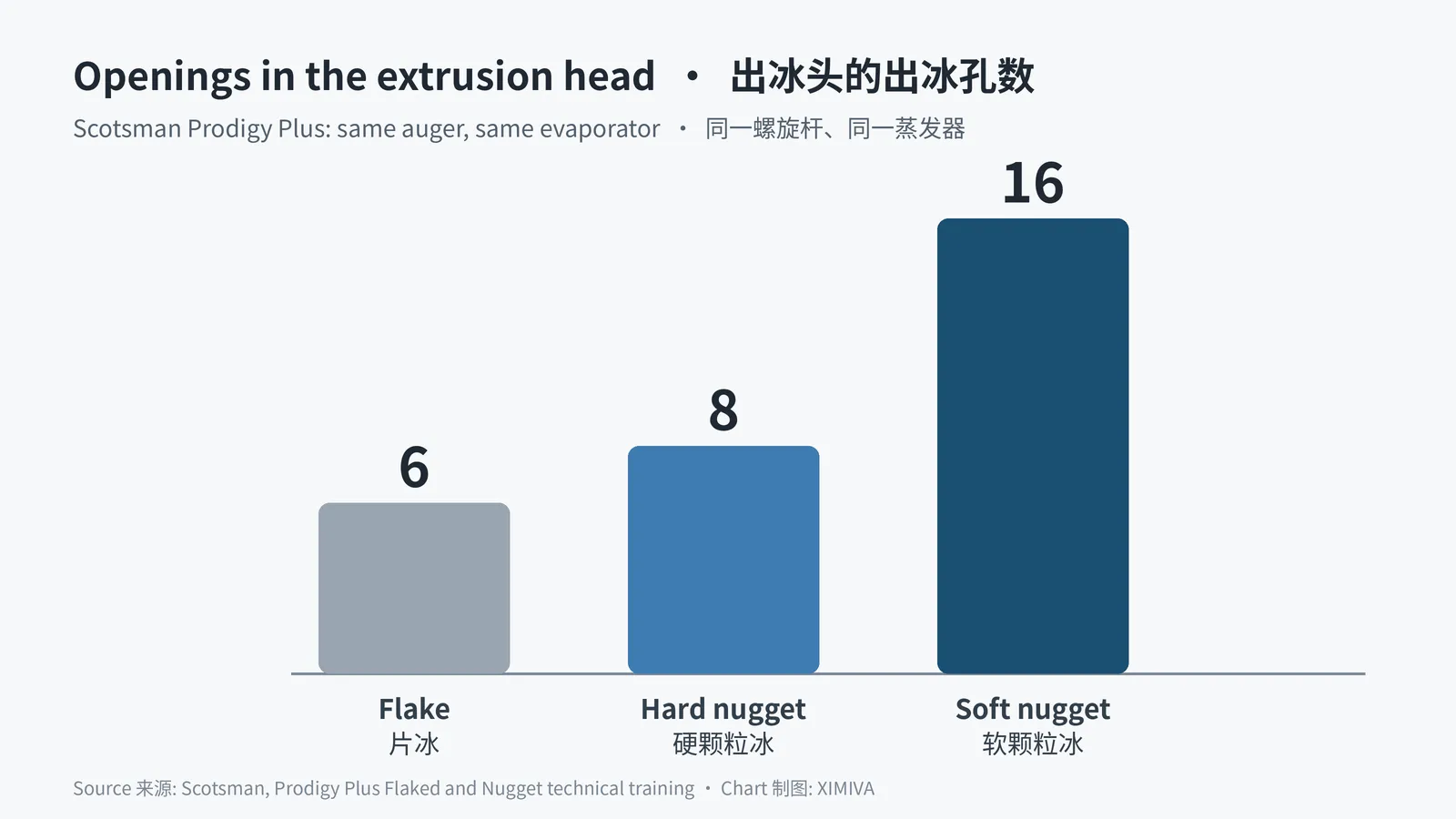
The same auger and barrel can make quite different ice. Scotsman's training material lists the openings in the extrusion head: 6 for flaked ice, 8 for hard nugget and 16 for soft nugget. The head, not the freezing, decides the shape.
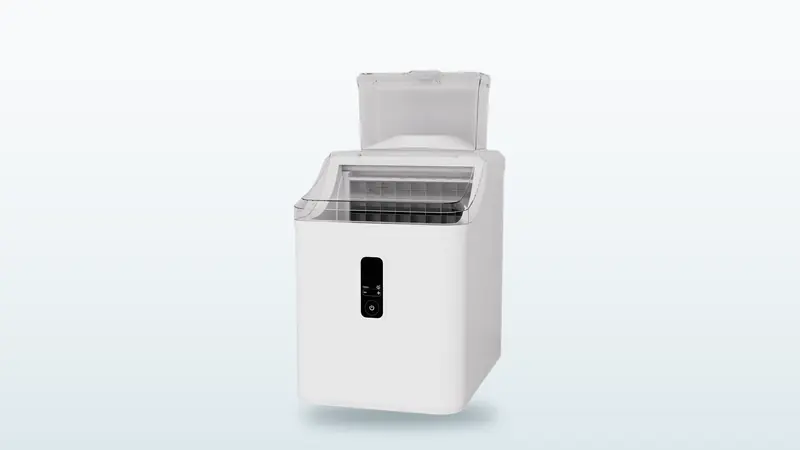
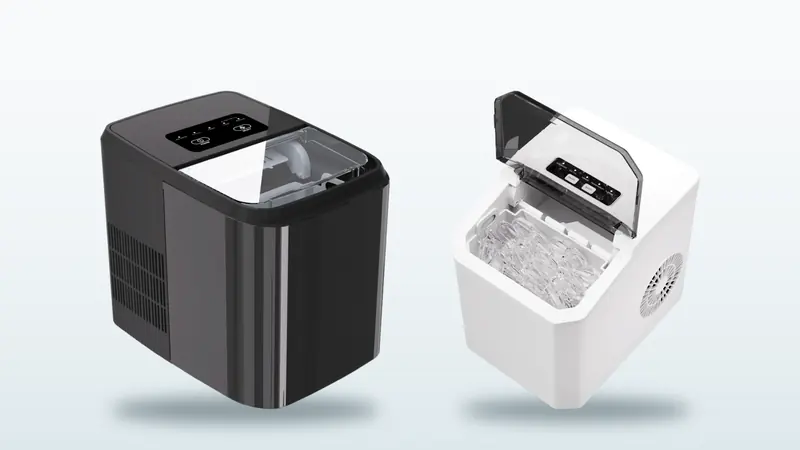
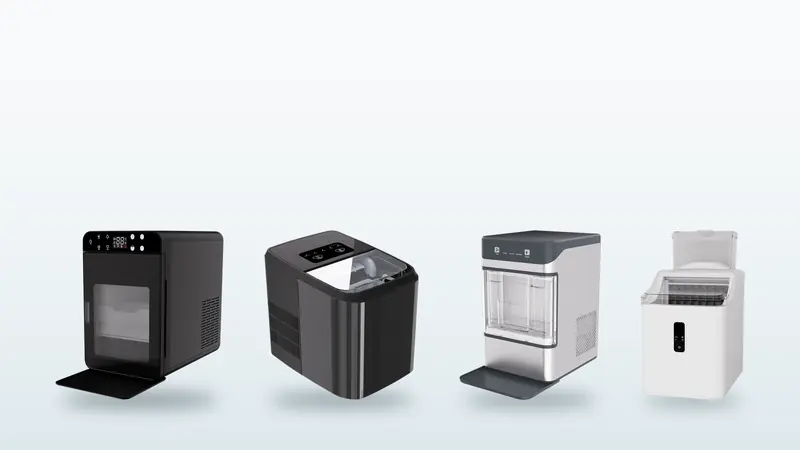
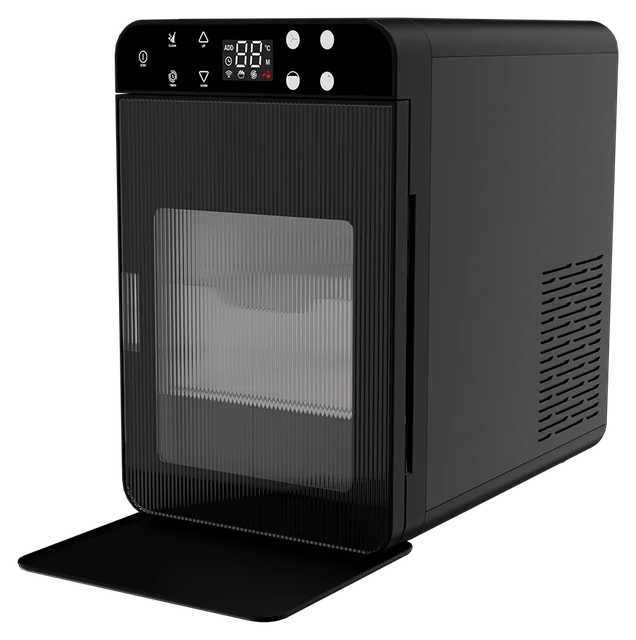
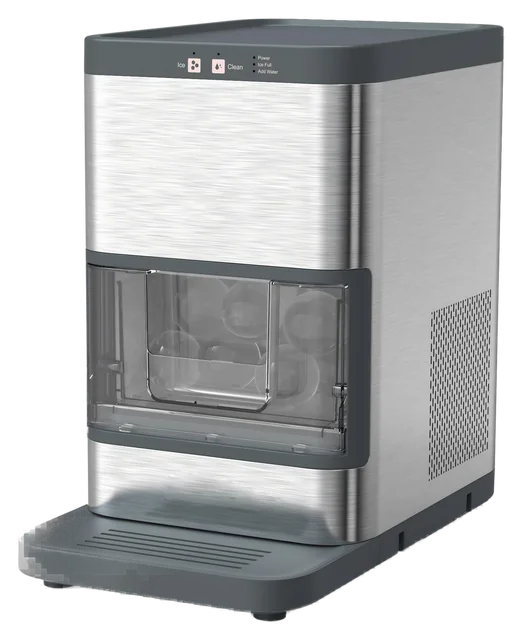
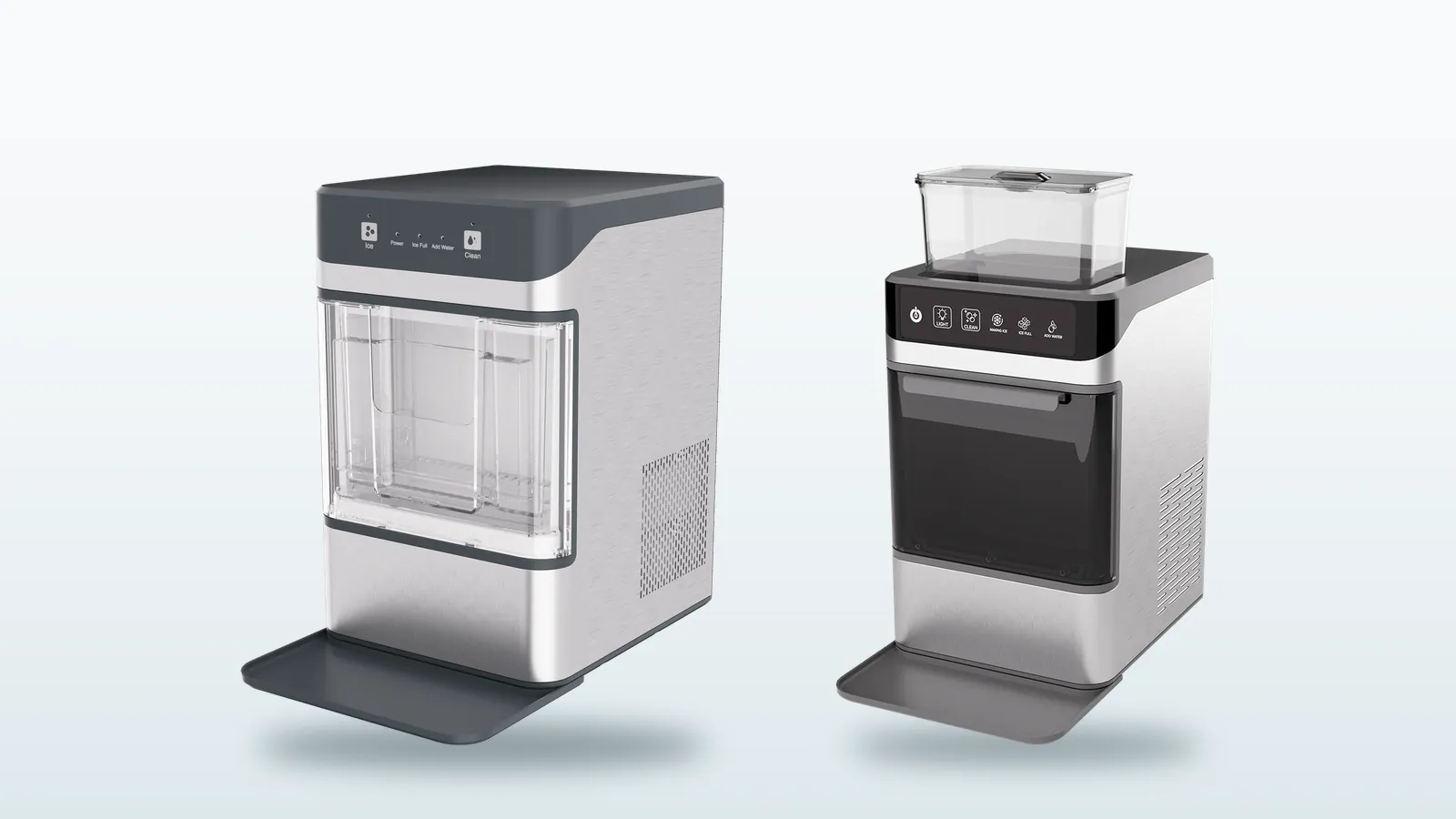
Our countertop nugget ice makers work the same way: water freezes thinly inside a cold cylinder, and an auger scrapes the flakes upward and presses them into soft, porous nuggets. You can watch the cycle in 3D on our technology page.
What the design means for you
It makes sounds a cube maker doesn't
GE's manual for its Opal nugget ice maker lists the normal ones: a fan whir, a pump buzz until it fills, a compressor hum, refrigerant rattles and gurgles, and the click of nuggets dropping into an empty bin, which gets quieter as the bin fills. A short run of noise right after the bin fills is normal too; Scotsman's machines keep the auger turning for 60 seconds after shutoff to clear the barrel.
Squeaking or grinding means scale
Because the auger turns so close to the wall, mineral scale on the barrel quickly turns into friction. GE says frequent squeaking usually means mineral scale inside and calls for a white-vinegar cleaning. Manitowoc's manual for its countertop nugget machines lists grinding, popping or squealing from the evaporator, and grinding from the gearbox, as signs of heavy scale.
It needs water all the time
Scotsman describes its flakers as "constant water in and ice flow out" machines that must have water at all times. On a countertop model, that means keeping the tank topped up. If the auger freezes up, some machines run a defrost: GE's Opal rinses itself and then goes back to making ice.
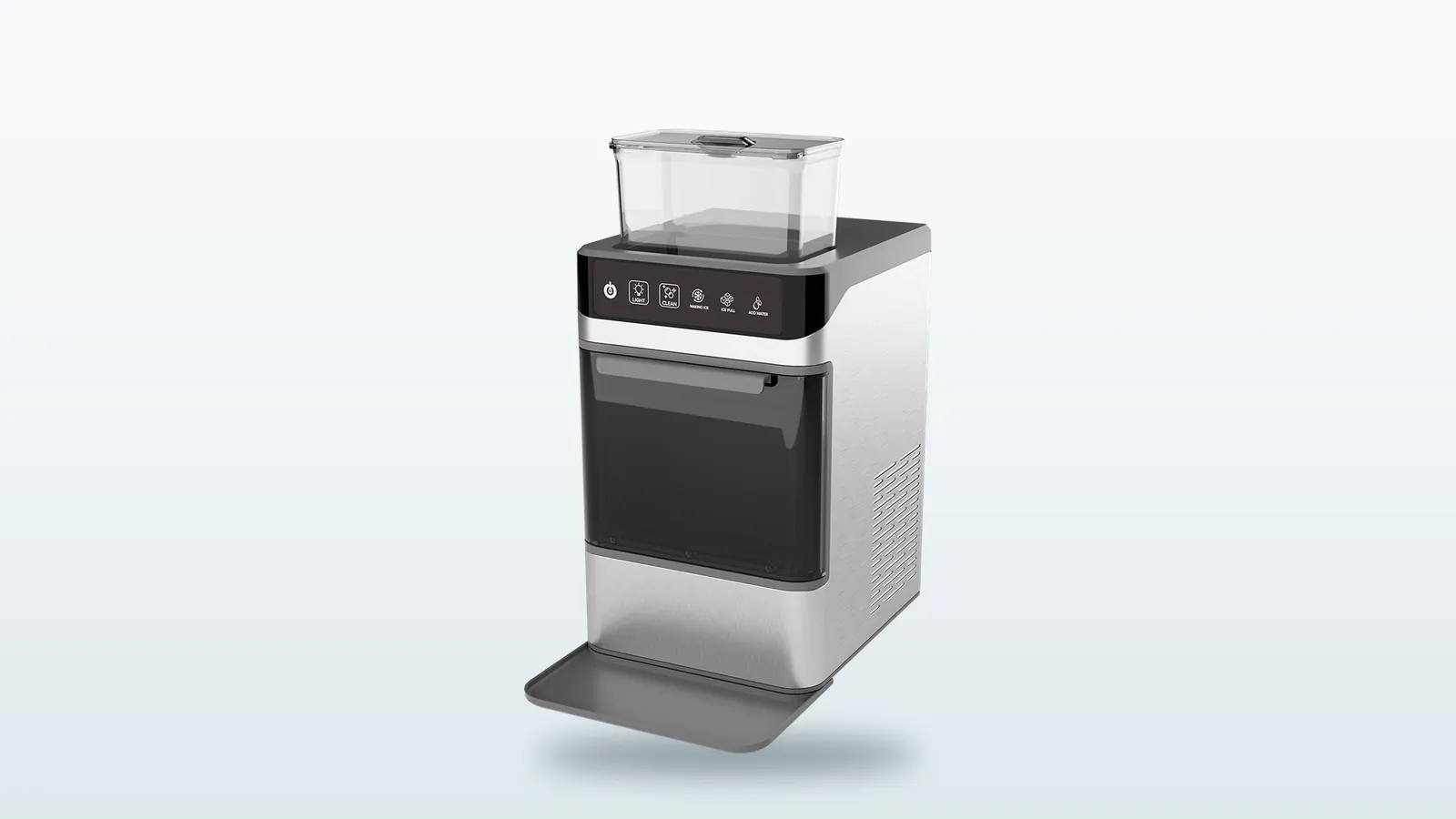
How to keep an auger machine happy
- Use filtered or soft water if your tap water is hard, and descale on schedule. GE recommends descaling the Opal every 2–3 weeks depending on hardness; Manitowoc recommends monthly preventive cleaning.
- Treat new squeaks as a reminder to descale, not as a fault to live with.
- Don't let the tank run dry, and empty and refill it daily.
- Follow your manual for cleaners and strengths. Our guide on how to clean and descale a countertop ice maker explains why descaler and bleach must never meet.
Choosing a machine? Our guide to countertop pebble ice makers explains what the output, bin and tank figures really mean.