How to clean and descale a countertop ice maker (and what not to use)
Cleaning, descaling and sanitizing are three different jobs with different products. How often to do each, how hard water changes the schedule, and what ice maker manuals warn against.
A lot of advice on how to clean a countertop ice maker stops at running vinegar through it. Read the manuals and it turns out to be three different jobs, each with its own product and schedule, and two of those products must never meet.
Three jobs: cleaning, descaling, sanitizing
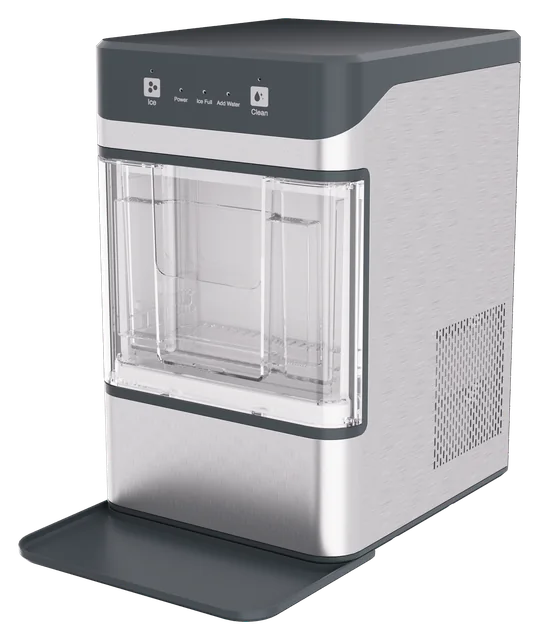
- Cleaning removes dust, film and residue. NewAir's manuals call for diluted detergent, warm water and a soft cloth on the interior. GE keeps soap on the outside of its Opal nugget ice maker and says not to use it in the reservoir.
- Descaling dissolves the mineral scale that hard water leaves behind, using an acid such as white vinegar, or the maker's own descaler. Manitowoc's manual for its countertop nugget machines points out that its cleaner removes scale, not algae or slime.
- Sanitizing kills the microbes that grow in a damp machine. GE adds one teaspoon of bleach to a full reservoir; Manitowoc uses its own sanitizer, always after cleaning.
Never descale and sanitize in the same water, and rinse in between. Bleach mixed with vinegar or another acid releases toxic chlorine gas, France's health safety agency ANSES warns.
How often: your water sets the pace
- Daily: replace the water in the reservoir every 24 hours, as NewAir and Whynter advise.
- Weekly: drain and dry the reservoir. GE also recommends sanitizing the Opal once a week.
- Every 2–4 weeks: descale. GE says every 2–3 weeks, depending on water hardness. We suggest a monthly deep clean, and Manitowoc recommends monthly preventive cleaning, adjusted to your water.
Water that is safe to drink can still be hard on an ice maker. The USGS grades hardness, measured as calcium carbonate, from soft (up to 60 mg/L) to very hard (above 180 mg/L), and notes that the EPA sets no legal limit for it. China's drinking water standard, GB 5749-2022, allows up to 450 mg/L, while GE's Opal manual asks for water under 205 mg/L. In the US, your water supplier must send you a water quality report every year, so start there; elsewhere, ask your water utility.
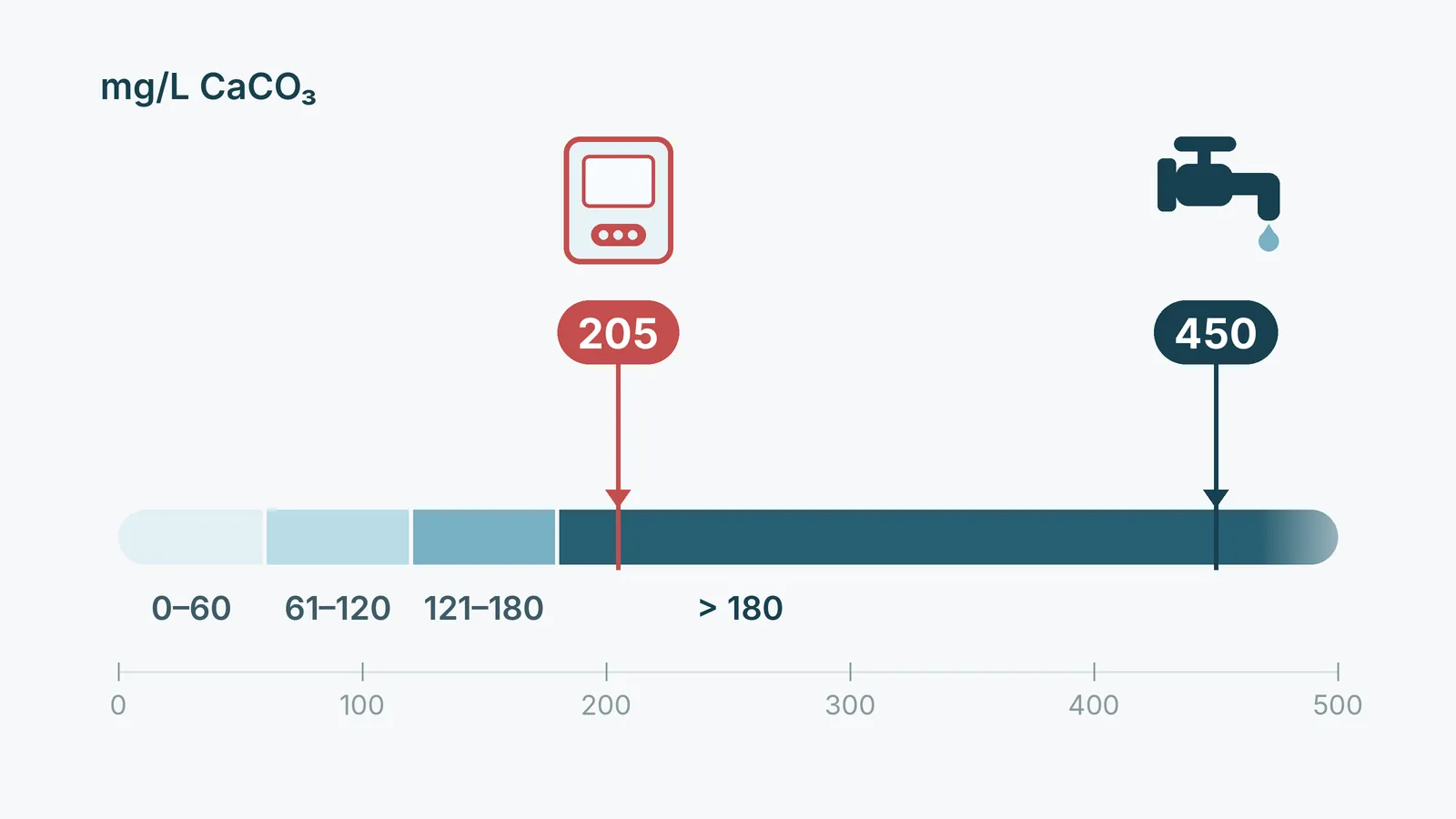
Signs it's time to descale: on GE's Opal, squeaking that grows more frequent usually means mineral scale inside, and a Cleaning light flashes as a reminder after 100 hours of ice making. Manitowoc treats grinding, popping or squealing from the evaporator of its nugget machines as a sign of heavy scale. If scale keeps coming back, GE suggests distilled water (check your manual first: Whynter warns its water sensor may not detect it), Whynter suggests a water softener ahead of a plumbed machine's inlet, and Manitowoc suggests having the water tested.
How to clean a countertop ice maker, step by step
Where your manual differs, follow it; this is the common ground.
- Empty it. Unplug, take out the basket, throw away the ice and drain the reservoir.
- Wash. Wash the basket in warm water and wipe the inside with a soft cloth.
- Descale. Fill with the solution your manual names; strengths vary a lot. GE fills the Opal with undiluted white vinegar, runs the cleaning cycle up to three times and lets it soak for 18 hours, wiping the walls with the solution and using a cotton swab in the cracks. Whynter's routine clean uses 1 part vinegar or lemon juice to 10 parts water. If your machine has a cleaning mode, use it: the YH1600 has a one-touch Clean button and the YH820 is self-cleaning.
- Rinse. Drain, refill with fresh water, run a cycle and drain again. GE does this three times.
- Sanitize if your manual calls for it, in a well-ventilated room. Then rinse again.
- Discard the first ice. Whynter throws out the first two batches; Manitowoc discards all ice made during cleaning and sanitizing.
- Dry. Wipe it dry, and before storing it, leave the lid open until it is completely dry.
What not to do
- Don't mix bleach with vinegar or any other cleaner.
- Don't use solvents, caustic or abrasive cleaners, rubbing alcohol or flammable fluids. Whynter warns that solvent-based cleaners can leave a taste in the ice and damage or discolor the interior.
- Don't put the machine in water. GE's Opal manual says no part of the product should be immersed, so check yours before soaking even the basket.
- Don't turn it upside down to dry. Whynter warns this shifts the compressor oil and can break the machine.
- Don't fill it with anything but drinking water: no drinks, no milk. GE calls any other liquid misuse that voids the warranty.
In a café, bubble tea shop or bar
The FDA Food Code, a model the FDA offers to state and local governments, counts ice as food, requires it to be made from drinking water and says ice makers must be cleaned "at a frequency specified by the manufacturer," or, without one, often enough to keep soil and mold from building up. Where your health department follows it, the manual's schedule is the rule. Post it where staff will see it and log each clean. The San Bernardino County health department in California also advises removing all the ice before cleaning.
Choosing a machine for the counter? A cleaning mode and a scoop in the box make the routine easier. Compare our countertop cube ice makers and sphere ice makers, or ask us on the Support page.