How much electricity and water does a countertop ice maker use?
About 0.2 to 0.3 kWh per kilogram of ice, going by our factory spec sheets. How to work it out from any spec sheet, what it costs, and the habits that waste power and water.
Two figures on a spec sheet tell you how much electricity a countertop ice maker uses: its rated input in watts and the ice it makes in 24 hours. Water is simpler still, because nearly all of it ends up in the glass. Here is the math with real numbers, and the habits that push both up.
How much electricity does a countertop ice maker use?
Multiply the rated input by the hours the machine runs and divide by 1,000. That gives kilowatt-hours (kWh), the unit on your power bill. These figures come from our factory spec sheets (full specs in our wholesale catalog):
| Machine | Rated input | Ice per 24 h | Running all 24 h | Cost at 18.2¢/kWh |
|---|---|---|---|---|
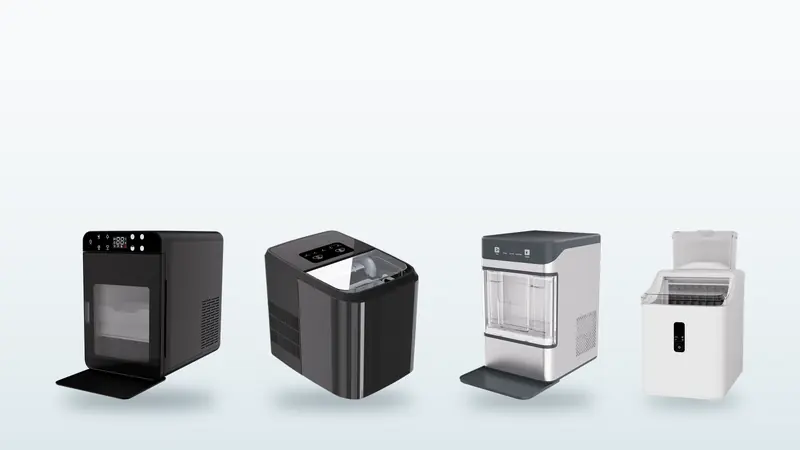
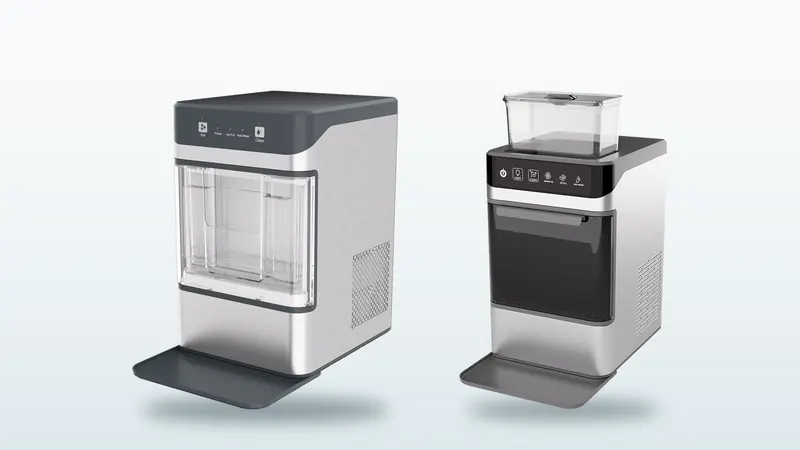
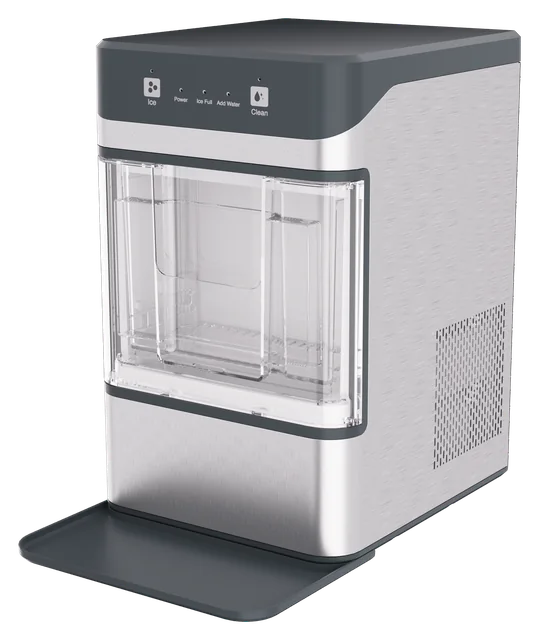
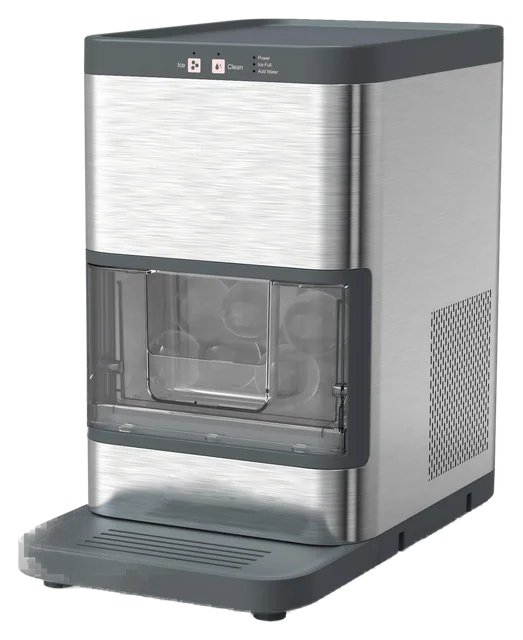
| Nugget (YH4025 family) | 130 W | 15 kg | 3.12 kWh | about 57¢ |
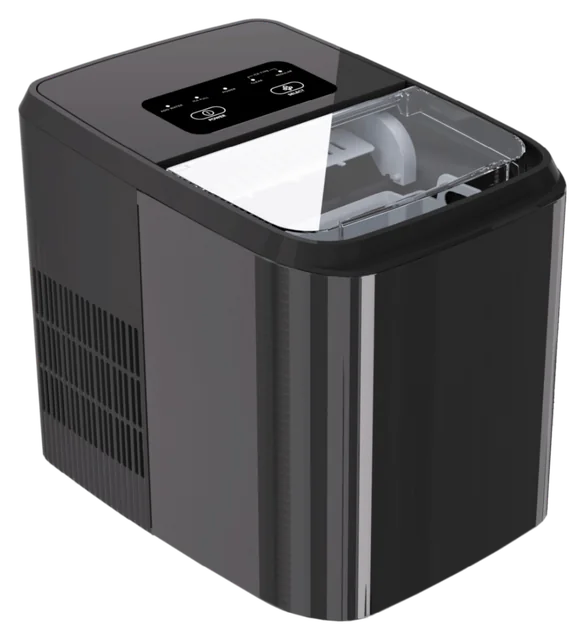
| Bullet, regular (YH16) | 130 W | 12 kg | 3.12 kWh | about 57¢ |
| Bullet, clear (YH18) | 130 W | 10 kg | 3.12 kWh | about 57¢ |
| Cube (YH820) | 150 W | 11.8 kg | 3.6 kWh | about 66¢ |
The price is the US Energy Information Administration's forecast of the average residential rate for 2026. Swap in your own.
That assumes nonstop ice-making all day, so it is the high end, not a typical day. When the basket is full, the ice-full sensor pauses production, so what you pay depends on how much ice you make: about 0.2 to 0.3 kWh per kilogram on these machines, or roughly 4 to 6 cents at that price. Output also changes with conditions such as room and water temperature, as the GE and Whynter manuals both note, so use this to compare machines rather than to predict your bill to the cent.
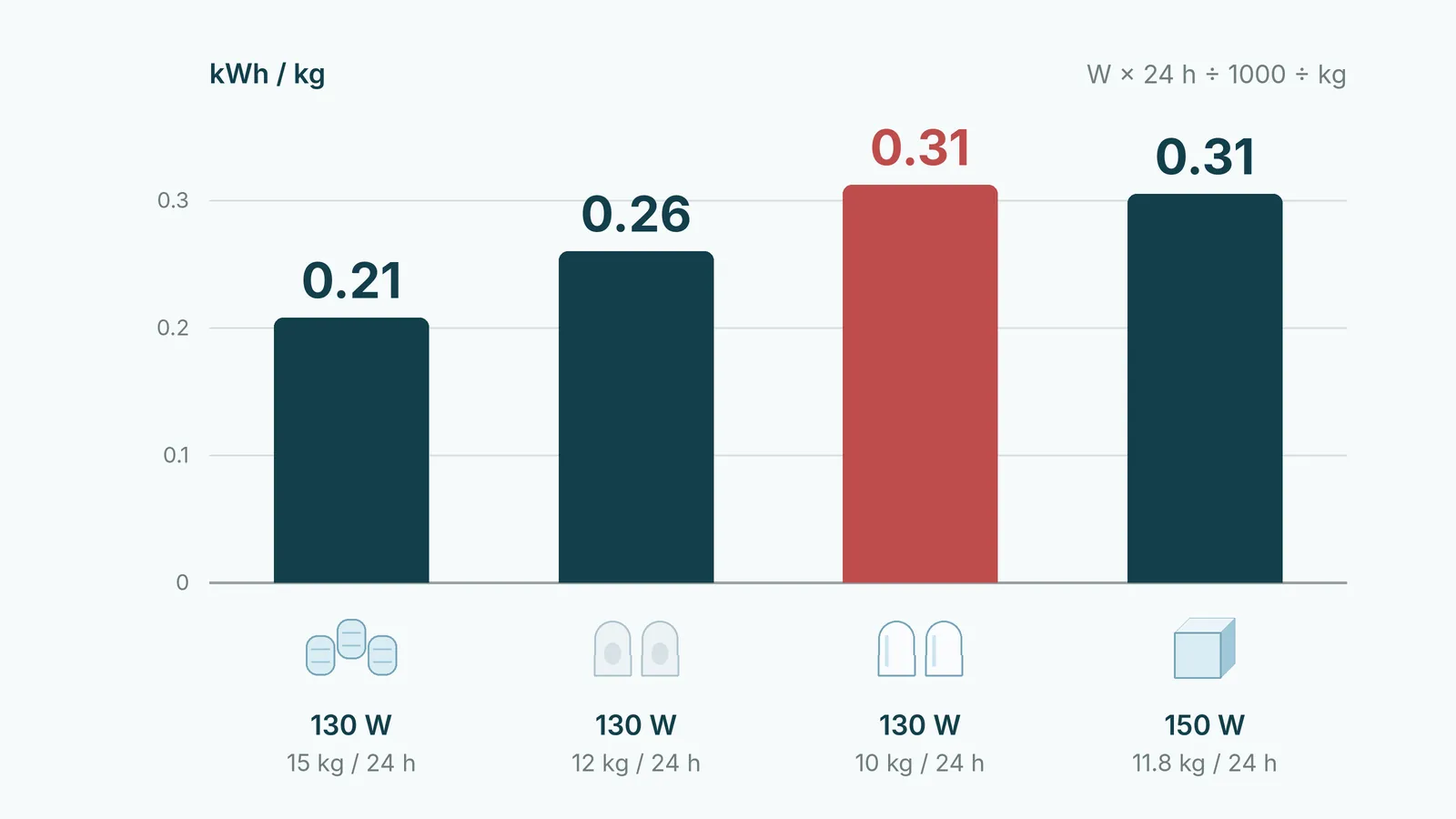
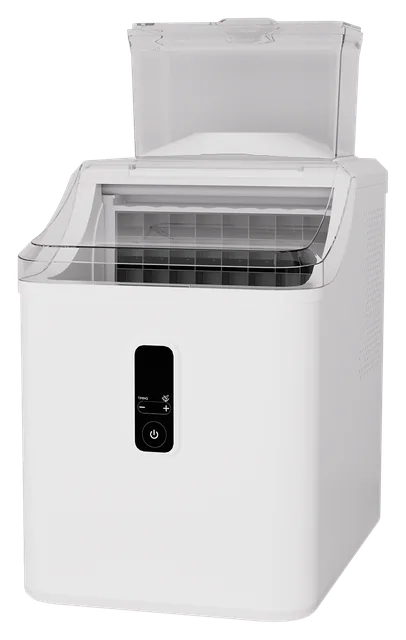
Two things stand out. On these sheets, the nugget machines make the most ice per kWh. And clear ice costs more: the YH16 and YH18 are versions of the same compact machine, but clear ice grows more slowly, so the YH18 makes 10 kg a day instead of 12. Each kilogram takes about 20% more electricity. The YH515 and YH22 switch between both modes: use regular ice for the ice bucket and clear ice for the glass.
What makes it run longer
An ice maker doesn't create cold. It pumps heat out of the water and into your room through the condenser and fan. Anything that makes that job harder means more running time for the same ice.
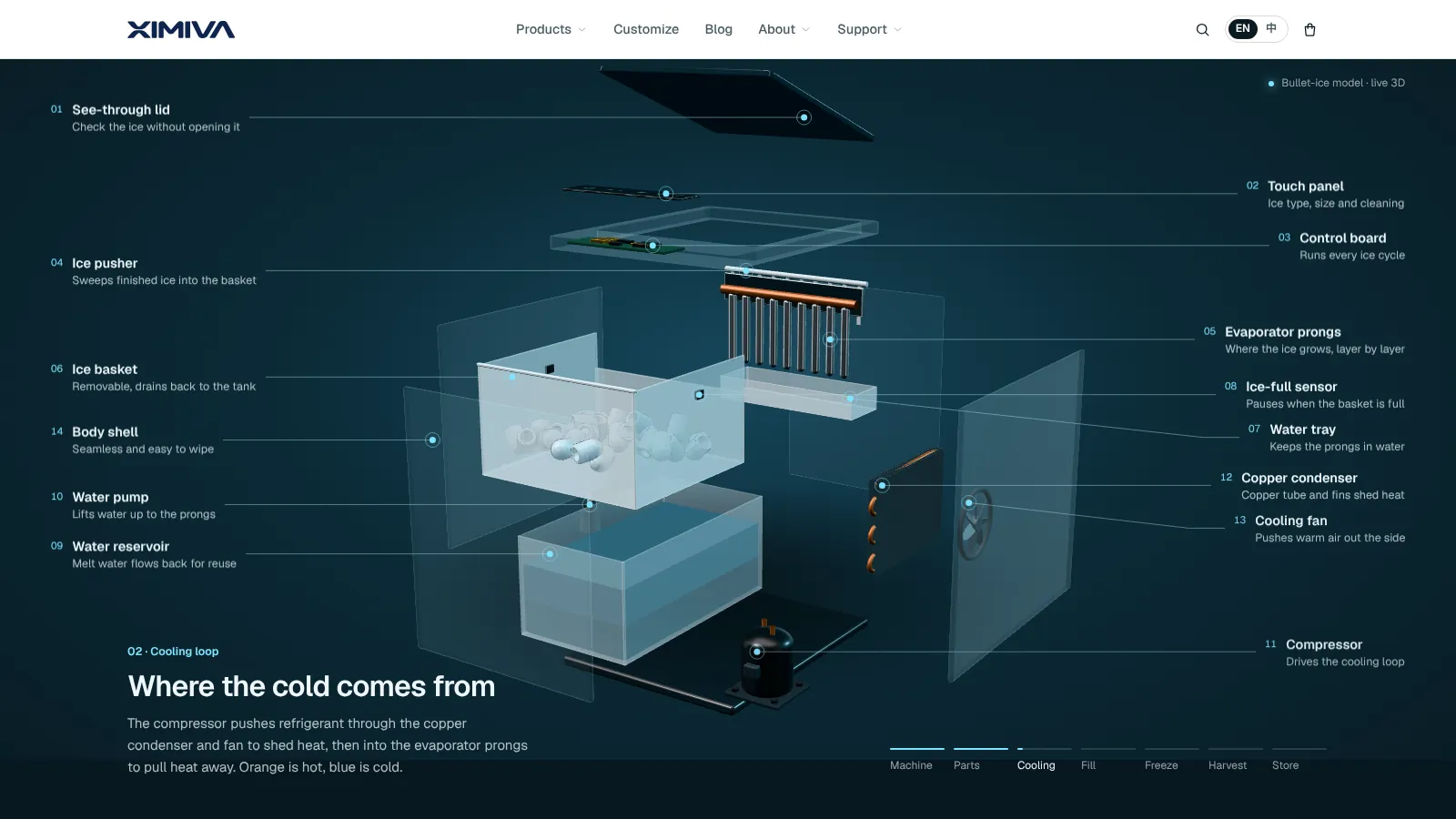
- A full basket left on all day. The basket keeps ice cool but isn't refrigerated, so the ice slowly melts, the water drains back to the reservoir and the machine freezes it again. You pay twice for that ice. If you want a stock, bag the ice, put it in the freezer and switch the machine off.
- Heat and poor airflow. GE's Opal manual asks for at least 4 inches (about 10 cm) of space at the sides and back, a room between 55 and 90 °F, and no oven, cooktop or direct sun nearby. Our spec sheets list 10–32 °C (50–90 °F). Whynter's manual names high room and water temperatures, a nearby heat source, a dirty condenser and blocked airflow as reasons a bin doesn't fill. We don't recommend running one inside a cabinet.
- Dust. GE warns that "dirt and lint can clog the condenser and reduce performance." Keep the vents clear and clean any air filter as your manual says.
- An open lid. The EPA tells commercial kitchens to keep ice-machine lids closed so the cold stays in. The same goes for the basket on your counter.
Water: nearly every drop becomes ice
According to the EPA, a perfectly water-efficient machine would need about 12 gallons (45 liters) of water for 100 pounds (45 kg) of ice: about a liter per kilogram. Not counting cooling water, commercial machines need 12 to over 50 gallons per 100 pounds, depending on how much rinse water they use: cube machines wash the ice as it forms and dump the rinse. Machines cooled with water that goes straight down the drain use 100 to 300 gallons per 100 pounds once the cooling water is counted.
A countertop machine wastes very little. Machines like ours are air-cooled, and melt water flows back to the reservoir to be frozen again. What you pour away is the water you drain and the rinse after cleaning: about a tankful each time, 1.5 to 2 liters on most of our models.
Don't hold on to old water to save it, though. GE recommends draining when you aren't using much ice, because melt water that circulates for a long time may affect the taste. We suggest draining and drying the reservoir weekly and deep-cleaning monthly (see our support page).
For cafés and bars
If your shop outgrows countertop machines, the EPA's advice for commercial ones is to buy an air-cooled ENERGY STAR model sized to what you actually use, and to consider nugget or flake ice, which take less water and energy than cubes. ENERGY STAR batch-type machines are on average 10% more energy-efficient and 20% more water-efficient than standard air-cooled ones.
Make the ice you need, keep the machine cool and dust-free, and freeze the extra. That is where most of the savings are.
To compare ice types, see our countertop nugget ice makers and countertop cube ice makers.